Please Pardon our Dust as our Site is Being Remodeled for 2026. Thank you!
The National Explorers Society is an independent research organization devoted to the systematic exploration of under-investigated natural, historical, and cultural places and phenomena. We seek to elevate both traditional scientific methods and the emerging field of synchrological inquiry—giving equal weight to causal investigation and meaningful co-occurrence in the pursuit of a better understanding of the natural world. Through fieldwork, archival research, and interdisciplinary collaboration, we aim to establish a new standard of transparency, integrity, and intellectual curiosity in the global exploration community.
For tens of thousands of years, exploration has been the flame by which humanity has endured, advanced, and transcended—and The National Explorers Society exists to kindle that flame in every soul, calling all toward the timeless and noble pursuit of the unknown.
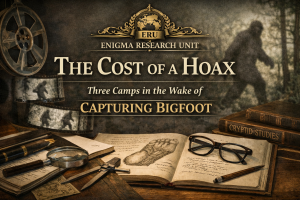
For nearly sixty years the Patterson–Gimlin film has remained the most debated piece of wildlife footage ever captured. Since that October day in 1967, the short reel of 16-millimeter film has been examined, stabilized, enlarged, measured, reconstructed, and argued over by skeptics, believers, and professional investigators alike. Now a new
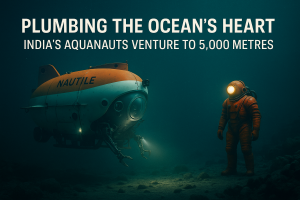
Introduction Ever since Jacques Piccard and Don Walsh descended nearly 11,000 metres in the bathyscaphe Trieste in 1960, mankind’s fascination with the unseen ocean abyss has endured. Now, in August 2025, two Indian aquanauts—scientists based in Chennai—have charted a new chapter in this grand narrative, reaching nearly 5,000 metres beneath
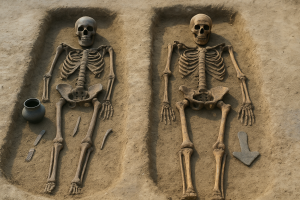
Introduction In mid-August 2025, researchers announced a remarkable revelation: two individuals buried in 7th-century England—one in Kent and another in Dorset—had recent Sub-Saharan African ancestry. Their genetic profiles open a new chapter in the story of early medieval Britain, revealing a society more globally connected than long believed. Historical &
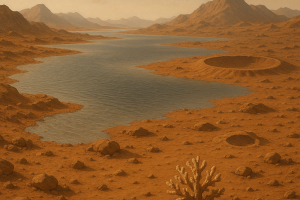
Introduction On July 24, 2025, NASA’s Curiosity rover photographed a small, intricately shaped rock in Gale Crater that resembles a piece of ocean coral. This curious, wind-eroded mineral formation—only about an inch across—offers a tangible whisper of Mars’s watery past, a delicate reminder that the Red Planet may once have
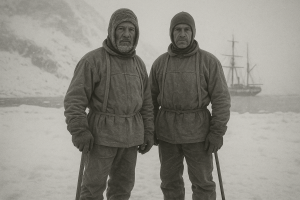
Introduction When Robert Falcon Scott and Ernest Shackleton set out for the far south more than a century ago, their ambitions were as much about scientific discovery as they were about national glory. At the turn of the 20th century, Antarctica was a vast blank space on the map—an uncharted